|
|
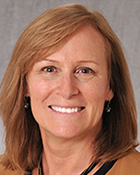
Carla J. Berg, PhD, MBA
Associate Center Director, Population Sciences and Policy
- About Carla J. Berg, PhD, MBA, LP
-
Carla J. Berg, PhD, MBA, LP is a Professor in the Department of Prevention and Community Health in the Milken Institute School of Public Health and the Associate Center Director for Population Sciences and Policy within the George Washington Cancer Center.
She received her Ph.D. in clinical health psychology from the University of Kansas, completed her residency training at Massachusetts General Hospital/Harvard Medical School in behavioral medicine, and then completed her postdoctoral training at the University of Minnesota in the Department of Medicine. She also completed her MBA at Emory University in 2017. She was faculty at Emory from 2009 to 2019, transitioning to George Washington University in the Summer of 2019.
Her research primarily focuses on social determinants of substance use, particularly tobacco and marijuana, ranging from macro-level factors such as policy and marketing to interpersonal and individual factors (e.g., psychological, biological). She has also conducted research regarding health behaviors and quality of life among cancer survivors. Methodologically, she has conducted large-scale survey studies involving both cross-sectional and longitudinal designs, mixed-methods studies, and individual- and community-level randomized controlled trials, among others.
|
|
|
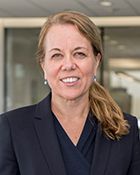
Catherine Bollard, MD
Associate Center Director, Translational Research and Innovation
- About Catherine Bollard, MBChB, MD
-
Catherine Bollard, M.B.Ch.B., M.D., is the Director of the Center for Cancer and Immunology Research at the Children’s National Research Institute, Director of the Program for Cell Enhancement and Technologies for Immunotherapy and a member of the Division of the Blood and Marrow Transplantation. In addition, she is a Professor of Pediatrics and Microbiology, Immunology and Tropical Medicine at the George Washington University and is the ACD for Translational Research and Innovation within the George Washington Cancer Center. In these roles, Dr. Bollard leads clinical and research efforts to fight cancer and other inflammatory diseases by strengthening the immune system using adoptive cell therapy. As a past president of the International Society of Cellular Therapy, and the current president of the Foundation for the Accreditation for Cellular Therapy (FACT) she is a distinguished hematologist, immunologist and immunotherapist, working to develop cell and gene therapies for patients with cancer and underlying immune deficiencies.
Additionally, Dr. Bollard is interested in stem cell and cord blood transplantation and improving outcomes by decreasing infectious complications and preventing relapse. She also has a specific interest in targeting viral infections in immune-suppressed patient populations, including individuals living with the human immunodeficiency virus. Dr. Bollard is a member of the American Society for Clinical Investigation (ASCI). She chaired the Non-Hodgkin Lymphoma (NHL) Committee of the Children’s Oncology Group from 2012-2020. She served on the Board of Directors of the Foundation for the Accreditation of Cellular Therapy (FACT) from 2010-2018 and in 2020 was appointed to President-Elect of FACT and in January 2021 started serving her term as President. Additionally, Dr. Bollard was a member of the Cellular, Tissues and Gene Therapies Advisory Committee of the Food and Drug Administration (FDA) from 2015-2019 and completed a six-year term on NCI’s Clinical Oncology (CONC) Study Section also in 2019. In 2019, she became a member of the Frederick National Laboratory Advisory Committee (FNLAC) for the NIH and an ad hoc member of the Pediatric Oncologic Drugs Advisory Committee (ODAC) for the FDA. She has been an Associate Editor for the journal Blood since 2014 and in 2020 was appointed Editor in Chief of Blood Advances (starting Fall 2021). Dr. Bollard has peer-reviewed more than 200 publications and has been continuously and independently NIH-funded for over a decade.
As a national and international leader in the immunology and immunotherapy space, Dr. Bollard’s work expands our understanding of cancer, immune deficiencies and viral infections in pediatric and adult patients. She joined Children’s National in 2013 from the Baylor College of Medicine where she was a tenured professor in the Department of Pediatrics. She received a medical degree from Otago University Medical School in New Zealand.
|
|
|
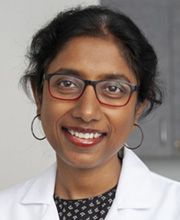
Pavani Chalasani, MD, MPH
Associate Center Director, Clinical Investigations
- About Pavani Chalasani, MD, MPH
-
Pavani Chalasani, MD completed her medical school at Gandhi Medical College in India and completed her Internship, Residency and Fellowship in Hematology-Oncology at the University of Arizona, Tucson. Dr. Chalasani was a part of the University of Arizona Cancer Center (UACC) as a faculty member focusing on breast cancer where she was very active in clinical and translational research.
Her key research interest is in the development of biomarkers- imaging, blood-based or tissue. She is the Principal Investigator on several investigator-initiated, industry-sponsored, and co-operative group protocols. She is the medical oncology study chair on S1706, a NCTN study for patients with inflammatory breast cancer. She was awarded the prestigious NCI’s Clinical Cancer Investigator Team Leadership Award in 2020. She served as Program Director for Hematology-Oncology Fellowship program while at the UACC. She has received research funding from NIH/NCI, American Cancer Society, Better Than Ever and DOD. She was recruited to be Division Director for Hematology-Oncology at the George Washington University, George Washington Cancer Center (GWCC) and started in her new role 02/01/2023. She is also Co-Program Lead for Clinical Translational Oncology Program at GWCC.
|
|
|
Sherrie Flynt Wallington, PhD
Associate Center Director, Patient-Centered Initiatives and Health Equity
- About Sherrie Flynt Wallington, PhD
-
Sherrie Flynt Wallington, PhD, MA, is a tenured Full Professor and Associate Center Director of Outreach and Community Engagement at the GW Cancer Center. She is also an affiliated faculty member at the GW Milken Institute School of Public Health and an affiliated faculty member of the Global Food Institute at GW.
Dr. Wallington teaches and conducts research on health communication, social determinants of health, health equity, and both mixed-methods and community-based participatory research. Her work centers on prevention, health disparities, and strategies to improve clinical trial recruitment and engagement. She has a particular interest in cancer prevention and control, with a focus on prostate, breast, and HPV-associated cancers.
She has authored numerous peer-reviewed publications and serves as a scientific grant reviewer for the National Institutes of Health (NIH) and other national foundations. Additionally, she works as a program evaluator and consultant on NIH-funded, governmental, and foundation-supported research initiatives.
Her research—supported by leading institutions such as the American Cancer Society, the Robert Wood Johnson Foundation, the Prevent Cancer Foundation, and the NIH, including the National Institute of Nursing Research and the National Cancer Institute—has made a lasting impact on the field.
|
|
|
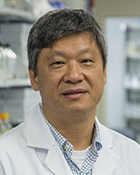
Edward Seto, PhD
Associate Center Director, Basic Sciences
- About Edward Seto, PhD
-
Dr. Seto’s laboratory focuses on understanding histone deacetylase, an enzyme that epigenetically regulates how certain genes turn on or off. As the associate center director, Dr. Seto is also developing three basic science research programs that will help the center’s bid for National Cancer Institute designation: cancer biology, immunology/immunotherapy, and microbial oncology.
|
|
|
Robert Siegel, MD
Associate Center Director, Professional Education and Clinical Network Development
- About Robert Siegel, MD
-
Robert Siegel, MD is board-certified in Internal Medicine, Medical Oncology, and Hematology. He is a professor with The George Washington University School of Medicine & Health Sciences.
Dr. Siegel received his BA from Stanford University in 1973 and his MD degree from George Washington University in 1977. His internship, residency, and fellowship all occurred at the Duke University Medical Center in Durham, North Carolina. Dr. Siegel returned to GW as a faculty member in 1982, was promoted to associate professor in 1989 and full professor in 2000. Upon returning to GW, he spearheaded the effort to create an oncology unit, which was dedicated in the spring of 1984 and established the Cancer Conference and Tumor Boards in the same year. He was also instrumental in establishing a certified hospital tumor registry in 1985.
Dr. Siegel's research initially focused on immune thrombocytopenic purpura and sickle cell disease. More recently, his publications have included studies that have refined the therapy of breast cancer and head and neck cancer. Dr. Siegel was among the first to document that young African American women are more likely to develop biologically more aggressive cancer compared to their Caucasian or Hispanic counterparts. Subsequent studies around the country have validated these results. He has supervised the medical school's second-year program in hematology since the fall of 1982, and has been director of the GW Board Review Course, the largest program of its kind in the country. In the past several years, 50-60% of all candidates who take the certification exam in hematology or oncology have taken the GW course.
Dr. Siegel has been director of the Oncology Unit since its inception in 1983, chairman of the Cancer Committee since 1987, director of the Clinical Cancer Center since 1993 and director of the Katzen Cancer Research Center since 2008. He was the director of the Division of Hematology and Oncology from 1997-2015. He has been a member of the Institutional Review Board for 23 of his 25 years at GW, was chairman for 5 years and co-chairman for one year. He is also the former chairman of the District of Columbia's tumor registry advisory committee.
Robert Siegel, MD, has been recognized for excellence in clinical care, and was given the Humanitarian of the Year award in 2005.
|